Search & AI
Top of search. Quoted by AI.
- Listings built around the words your buyers search for.
- Written to answer the questions AI shopping assistants are asked.
- You see where every product ranks, and whether it is climbing.
How it works
How a product gets found
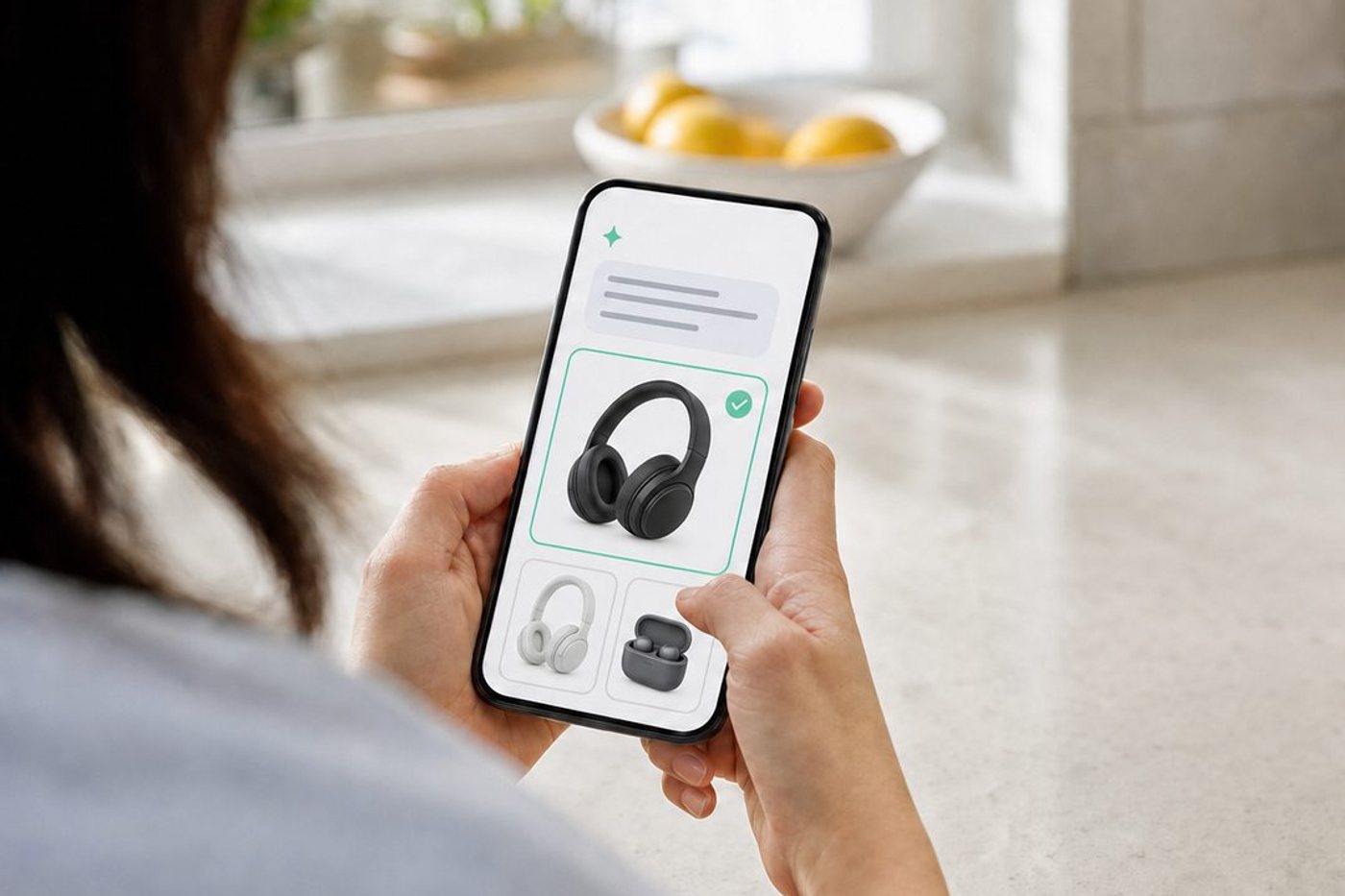
Marketplace search changed. Buyers ask questions now, and an assistant answers them by reading the whole listing. We build for both: the search bar and the assistant.
01Research
We pull the terms buyers use in your category on each marketplace, and the questions they ask alongside them. That list is the brief for everything else.
02Structure
Title, bullets, back-end search terms and the attribute fields behind the listing are filled in completely. Those fields are what search reads first, and they are often left half empty.
03Answer
The listing is written to answer real buyer questions in plain sentences, because that is what an AI assistant quotes back when someone asks.
04Track
Positions are tracked by product and by term. What moves stays, what does not gets rewritten and tested again.
What it covers
Everything under search & AI
All of it runs inside the partnership. No separate fee, no separate contract, and the work carries across every marketplace we sell on.
Keyword research
The terms buyers use in your category, pulled from real search data rather than guessed. Shoppers search differently on each marketplace, so each one gets its own list.
Rufus and AI search
Rufus is the AI assistant inside the Amazon app, and it answers a shopper by reading your listing, your A+ content and your reviews. We write those so they give it a clear answer instead of a wall of keywords.
Product data and attributes
Material, size, use, compatibility and the rest of the detail fields behind the listing, filled in completely. Search reads those fields to match a shopper to a product, so an empty one is a search you never show up in.
Rank tracking
Where each product sits in the results for the words that matter, tracked week over week. You see whether a rewrite moved it, not just that it happened.
Where we sell
Marketplaces we sell on
Amazon
Our home marketplace, Canada and US. Canadian fulfillment and compliance on both sides of the border.
Walmart
A second marketplace for brands ready to widen beyond Amazon alone.
eBay
A different buyer and a different rulebook. We know how it runs, for catalogs that fit it.
TikTok Shop
Where discovery happens now. We are building the playbook for brands that want in early.
How is this different from content management?
Content management is the page itself: the images, the A+ content, how it reads once a buyer is on it. Search & AI is how the buyer gets there. We run both on every product we carry.
Is this different from advertising?
Yes. Advertising buys a slot and ends when the budget does. Search position is earned by how the listing is built and it stays with the product.
What is Rufus?
Amazon’s built-in AI shopping assistant. Shoppers ask it questions in the app and it answers from listings, reviews and A+ content, so what your listing says now matters more than which keywords it repeats.
Does this cover AI outside the marketplaces?
Where buyers research a product in a chat assistant before they shop, the same clear product information is what gets quoted. We write once for both, though only the marketplaces give us numbers to report on.

Visibility you own, not rent.
An ad stops the moment the budget does. Search position is built into the listing and stays with the product. If your catalog disappears without ad spend, start here.